
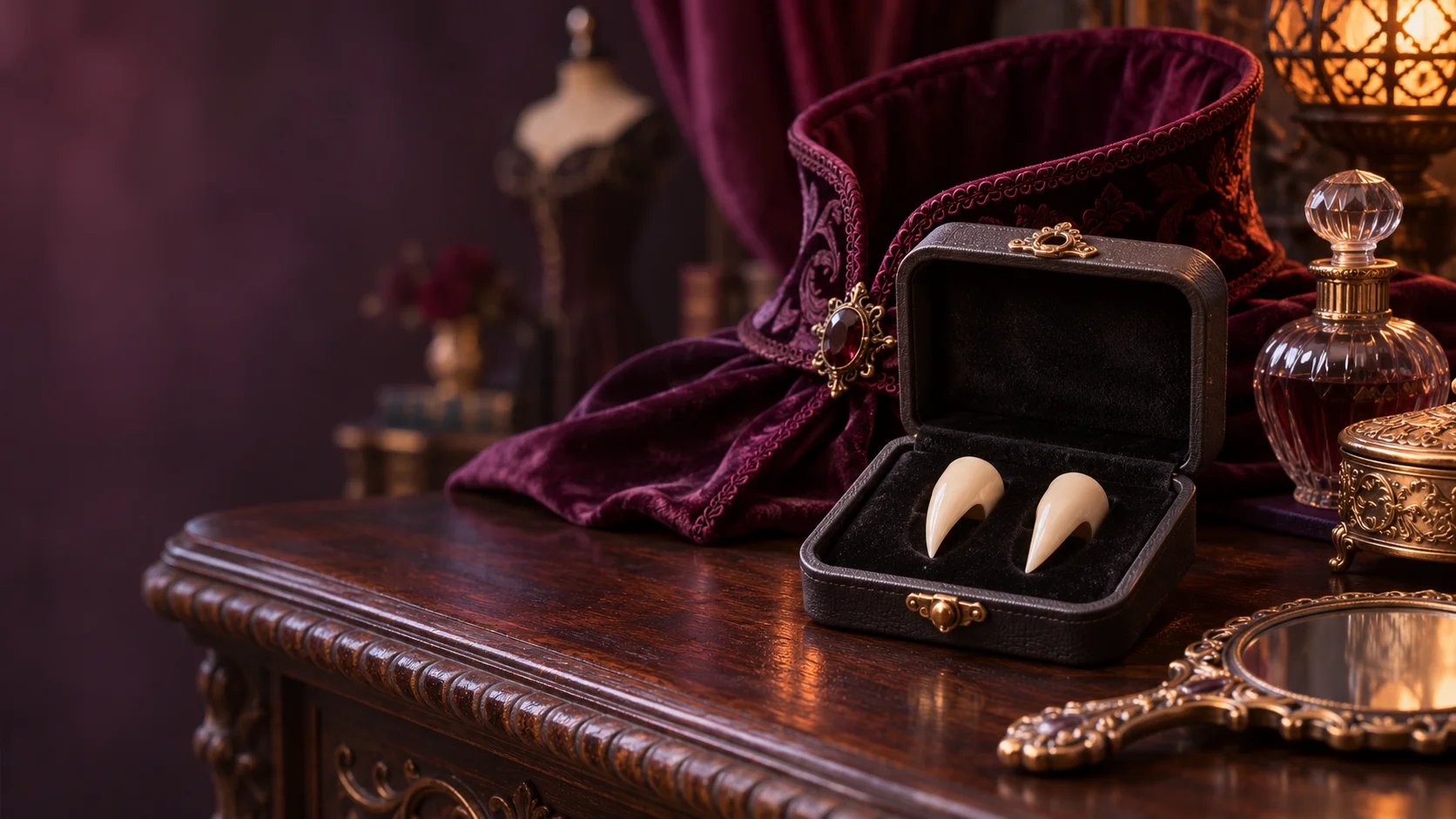
Keep craft projects outside the mouth
Paper, resin, nail tips and general craft adhesives are not interchangeable with products intended for oral use. A material being described as non-toxic does not establish that it is suitable to shape or bond onto teeth. This guide does not provide a homemade dental molding recipe. You can still make decorative fangs for a mask, display head or photograph without putting them in your mouth.
Choose a non-wearable effect
For a mask, draw two small tapered shapes on cardstock and cut them with rounded points. Attach them to the mask's decorative mouth area, away from your lips and breathing space. For a portrait, use an editing effect and label it if presenting the image as a construction example. Neither approach requires bonding anything to your teeth.
Check a wearable product before purchase
Ask your dentist whether a novelty mouthpiece is suitable for you, especially if you have dental work or orthodontic appliances. Read the manufacturer's restrictions and fitting instructions before opening it. Avoid a product without a clear maker, material information or removal instructions. A photograph cannot tell you whether the piece fits your bite.
Treat fit problems as a reason to stop
Do not force, file or glue a poorly fitting piece into place. Delta Dental warns that costume mouthpieces can harm gums or tooth enamel. Remove the piece and seek dental advice if it causes pain or injury. Keep small parts away from children and follow the product's age restrictions.
Plan the rest of the character
Hair, clothing and an expression can communicate a vampire or creature without dental accessories. Put the creative effort into a collar, silhouette or external mask detail instead. Our mask project provides an outside-the-mouth alternative that can be removed without touching your teeth.
Keep dental work out of a craft tutorial
A tooth accessory sits on a part of the body that is difficult to evaluate from a photograph. General craft resin, nail products, paper and household glue are not dental materials. A label such as non-toxic does not establish that a product is suitable inside the mouth or safe to attach to enamel. This article therefore gives no recipe for molding or bonding fangs to teeth. If you want a wearable novelty product, discuss suitability with your dentist and follow its manufacturer's restrictions. A costume can communicate a vampire or creature without anything attached to the teeth.
Use an external mask detail
Draw a mouth shape on paper and place it on a mask or display head rather than in the mouth. Cut two small tapered shapes from suitable craft material and round their points. Keep them away from the wearer's lips, nose and breathing area. Test the full mask for sight and airflow before calling it wearable. If a larger decorative mouth would make movement awkward, use it only for a controlled photograph. Read the material maker's instructions for adhesive and finish. This approach keeps the tooth-like shape outside the mouth and makes it easy to remove with the mask.
Create the effect with styling
A collar, dark clothing, hair styling and a deliberate expression can establish a vampire character without a dental accessory. Choose one visual detail that photographs clearly. Makeup may add contrast around the mouth, but use products intended for the relevant skin area and follow their label. Test a new product ahead of the event and stop using it if irritation develops. Do not use a craft pigment or glue on the lips because its color looks right. The result can be expressive while leaving normal speech, eating and breathing unaffected.
Consider a clearly labeled image effect
For a portrait or poster, an edited fang effect can be added after taking the photograph. Plan the lighting and pose so the result looks intentional, then label the image as edited if you present it as an example of costume construction. Do not claim that the effect demonstrates a wearable dental piece. An external prop held near the face can also be photographed without entering the mouth, provided it does not block vision or touch the skin unexpectedly. Keep the original photograph and edit separately so you can compare how much of the character comes from the costume itself.
Ask the right questions about a product
If you are considering a commercial mouthpiece, look for a clear manufacturer, material information, age restrictions and instructions for fitting, wear and removal. Ask your dentist about your own dental work, bite or orthodontic appliances before using it. A seller's photograph cannot establish fit. Do not force a piece that feels too tight, catches a tooth or changes the way you close your mouth. Avoid sleeping or eating with a novelty item unless the maker and dental professional advise that use. If the information is missing, choose a non-wearable effect.
Stop if the fit is wrong
Pain, gum irritation, an inability to remove a piece easily or a change in your bite are reasons to stop. Do not file a poorly fitting product while it is in the mouth and do not add household adhesive to keep it in place. Seek dental advice if a tooth or gum is injured or a piece becomes stuck. Keep small detachable items away from children and follow any age guidance. Do not share a mouthpiece with another person. A novelty accessory is not worth risking damage to teeth or soft tissue for a single event.
Plan the whole character without fangs
List the elements that identify the character: colors, silhouette, hairstyle, jewelry, cape or a distinctive pose. Choose two or three that you can wear comfortably. A clear costume gives viewers enough context even when the mouth is not altered. If an external mask is part of the look, practice taking it off quickly and check the venue rules. For a social event, consider whether you want to speak, eat and drink normally; those needs may make a dental accessory especially inconvenient. Build a version that works through the day, not only for one close-up photo.
Use dental and costume sources
The American Dental Association's guidance on decorative dental grills warns against glue inside the mouth and advises talking with a dentist; a grill is not the same product as a costume fang, but the caution about improvised attachment is relevant. Delta Dental's Halloween guidance discusses risks from costume mouthpieces. The FDA's costume safety guidance offers broader advice on makeup and masks, while venue policies govern what can be worn at an event. These sources do not approve a homemade dental device. The safest craft approach here remains outside the mouth.
Questions about alternatives
Can you make a convincing creature look without dental pieces? Yes; focus on color, costume silhouette, expression and an external mask detail. Is a craft material safe in the mouth because it says non-toxic? No; that label does not establish suitability for oral wear or attachment to teeth. What if a purchased mouthpiece does not fit? Stop rather than forcing or gluing it, and ask a dentist for advice. Can you edit a photograph? Yes, while making clear that the effect is edited when showing it as a making example. What if you have existing dental work? Ask your dentist before considering a novelty piece. A costume should not require risking a tooth or gum injury to be recognizable. If a look depends entirely on a close-up of the teeth, try a photo-only edit before buying a wearable product. You may find that the rest of the costume already communicates the character well.