
Assess the wig before touching a knot
Find the care label or product page before brushing. Confirm whether the wig is traditional synthetic, heat-friendly synthetic or human hair, and check for lace, skin-top pieces, sewn wefts, glued spikes and attached accessories. Those details determine what you can safely separate and whether a product or heat method is permitted. If you cannot identify the fiber, begin with the gentlest dry method and do not assume it is heat resistant.
Photograph the wig from the front, back and sides. A photograph gives you a reference for the part, curl pattern and overall silhouette if sections move during cleaning. Look for melted fibers, broken lace or a matted area tight against the cap. A comb cannot reverse heat damage or restore severed fibers. Heavily matted or delicate pieces may need a specialist rather than more force.
The Epic Cosplay long-wig guide advises finger-separating sections that resist a brush. Treat that as a cue to slow down, not as permission to pull harder.
Prepare a stable, gentle work area
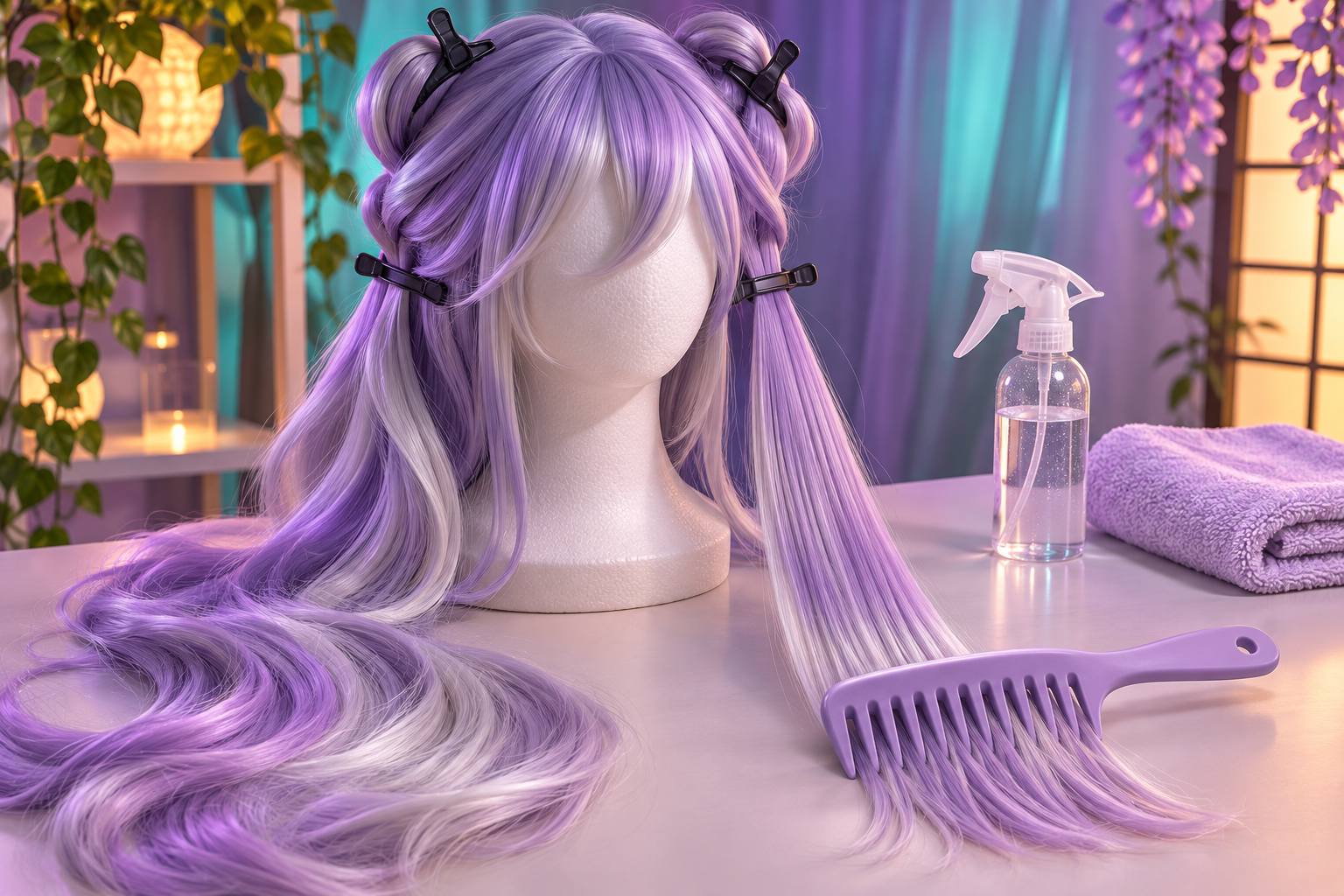
Place the wig on a stand that supports the cap without stretching it. Put a towel beneath long lengths so they do not drag across a rough tabletop. Gather clips, your maker-approved comb or brush and, only if allowed, a compatible detangling product. Work in bright, even light where you can see which fibers belong to each knot.
A wig stand is useful for access, but do not pin through lace or tug a hand-tied area to make it sit more firmly. Secure the cap only where its construction allows. Set jewelry and hook-and-loop fasteners aside; they can create new snags while you work.
If the wig is damp from a wash, consult its care instructions before combing. Epic Cosplay's FAQ tells owners of its wigs to let them dry completely before brushing. Our wig washing guide explains why washing and detangling need to follow the maker's order.
Separate one manageable section
Divide the wig into a few loose sections and clip the rest away. Start with a section narrow enough to hold comfortably between your fingers. Support it above the first knot so the pulling force does not travel to the cap, weft or lace front. On a very long wig, place the free length on the table rather than letting its weight drag downward.
Use your fingers to identify whether the tangle is one loop, several crossed fibers or a larger mat. A wide-tooth comb can pass through a loose section, but a tool should never be forced through resistance. Arda's wig FAQ recommends working from the bottom upward. That sequence lets you release lower knots before they are tightened by a stroke from the roots.
Release the ends before moving upward
Hold the section above the tangled area. Loosen the lowest knot with fingertips, then make a short comb pass through only the last few inches. Once that portion moves freely, shift your grip and work a little higher. Repeat until the section is clear. Short strokes help you spot resistance before it becomes a hard pull on the cap.
Epic Cosplay's care guide also describes starting at the bottom and progressing upward for its synthetic wigs. Use the brush or comb its maker recommends. For some fibers, a wide-tooth comb is appropriate; a fine-tooth comb or ordinary brush may catch, abrade or frizz the strands.
If a knot tightens, stop the stroke. Separate a few fibers at a time with your fingers and return to the comb only after the knot relaxes. Several small passes are usually easier to control than one long pull.
Treat curls and styled sections differently
A curl is an intentional group of fibers, not a straight section waiting to be brushed flat. Check whether the maker recommends fingers, a wide-tooth comb or a particular reshaping method for its curly styles. If the curl has tangled with another curl, isolate the groups first and work on the loose ends before deciding whether the original shape needs to be reset.
Jon Renau's curly synthetic care guide advises a wide-tooth comb for its curly styles and reshaping curls with fingers. That advice applies to its products; a sculpted cosplay wig held with glue or spray may need different handling. Do not brush through a rigid spike or a secured braid merely to make it feel smooth.
Keep the reference photograph nearby. When the section is free, lay or clip it in its original direction. If the style will not recover without heat, verify the exact fiber's limits first. An unknown synthetic wig should not be tested with a hot iron.
Choose products by fiber and cap construction
A detangler or conditioner can reduce friction, but only if the maker approves it for the fiber and finish. Test a hidden section, use the recommended amount and keep the product away from knots or adhesives if the instructions say so. Spraying the whole wig before identifying the cap can make lace, glued pieces or a styled part harder to manage.
Jon Renau's synthetic guide warns against placing certain products on hand-tied knots because they can loosen the base. It also notes friction at high collars as a cause of matting. These are useful checks for a costume wig, but product choices must still follow the wig you own.
Avoid household solvents, fabric softener and a random oil as a rescue attempt. Residue can change the feel or appearance of synthetic fibers and may be difficult to remove. If the maker's instructions are unavailable, ask the seller before applying a new chemical.
Check friction points before the next event
Once one section is clear, keep it separate from unfinished areas. After all sections are manageable, put the wig on with the full costume. Watch where long fibers rub against a collar, armor edge, backpack strap or prop. Moving an accessory, covering a rough edge or gathering the wig loosely for travel may prevent the same knot from returning.
Walk and turn your head for a few minutes in the outfit. A wig that looks smooth on a stand can catch repeatedly during use. Note which area tangles first, then plan a small costume change rather than relying on aggressive detangling after every event.
The maker's storage guidance matters too. Keep the cap supported, protect the silhouette and do not crush long fibers under other costume pieces. Do not store a damp wig in a closed bag.
Know when to stop and seek help
Stop if you see lace stretching, a weft lifting, a glued section separating or large numbers of fibers coming away. Detangling cannot repair a damaged base. If the knot sits against a hand-tied area, a specialist may be able to assess it with less risk than repeated pulling.
Do not cut out a mat until you understand what lies beneath it. A cut close to the cap can remove visible density or damage lace. If the problem is mainly frizz rather than crossed fibers, read the maker's restoration advice instead of forcing a comb through it. Jon Renau's synthetic guide describes different handling for wear-related friction frizz and basic tangles.
For a convention deadline, a smaller, less perfect style may be safer than a rushed chemical or heat experiment. Record what worked so the next maintenance session starts with the right tools.
Questions about detangling a cosplay wig
Should I brush from the roots downward?
Begin at the ends. Support each section above the knot and move upward only after the lower length is free. A full-length stroke can tighten tangles and pull on the cap.
Can I detangle a curly wig the same way?
Check its maker's instructions. Separate curls gently and preserve the original groups; brushing a styled curl flat may change the shape.
Can a spray fix a heavily matted wig?
A compatible product may help with ordinary friction, but it cannot repair melted fibers, broken lace or severe matting. Identify the fiber and ask for specialist help when the base is at risk.
When should I detangle after an event?
Inspect the wig after wearing it and address small knots before storage, following its care directions. Let a wig dry first if its maker says not to brush it while damp.