Choose the effect you need
Decide whether you want a lighter color, straighter line or less contrast. Those are different tasks. Sketch the intended brow above a photo of your own face before applying anything. Often a modest change works with the wig and eye makeup without needing complete concealment.
Use products intended for the area
Read labels and use brow or complexion products only as directed. Do not substitute school glue, craft paint or general adhesive. The FDA warns against using cosmetics near the eyes unless intended for that use. A popular online technique is not evidence that an unfamiliar product is suitable.
Try a light coverage approach
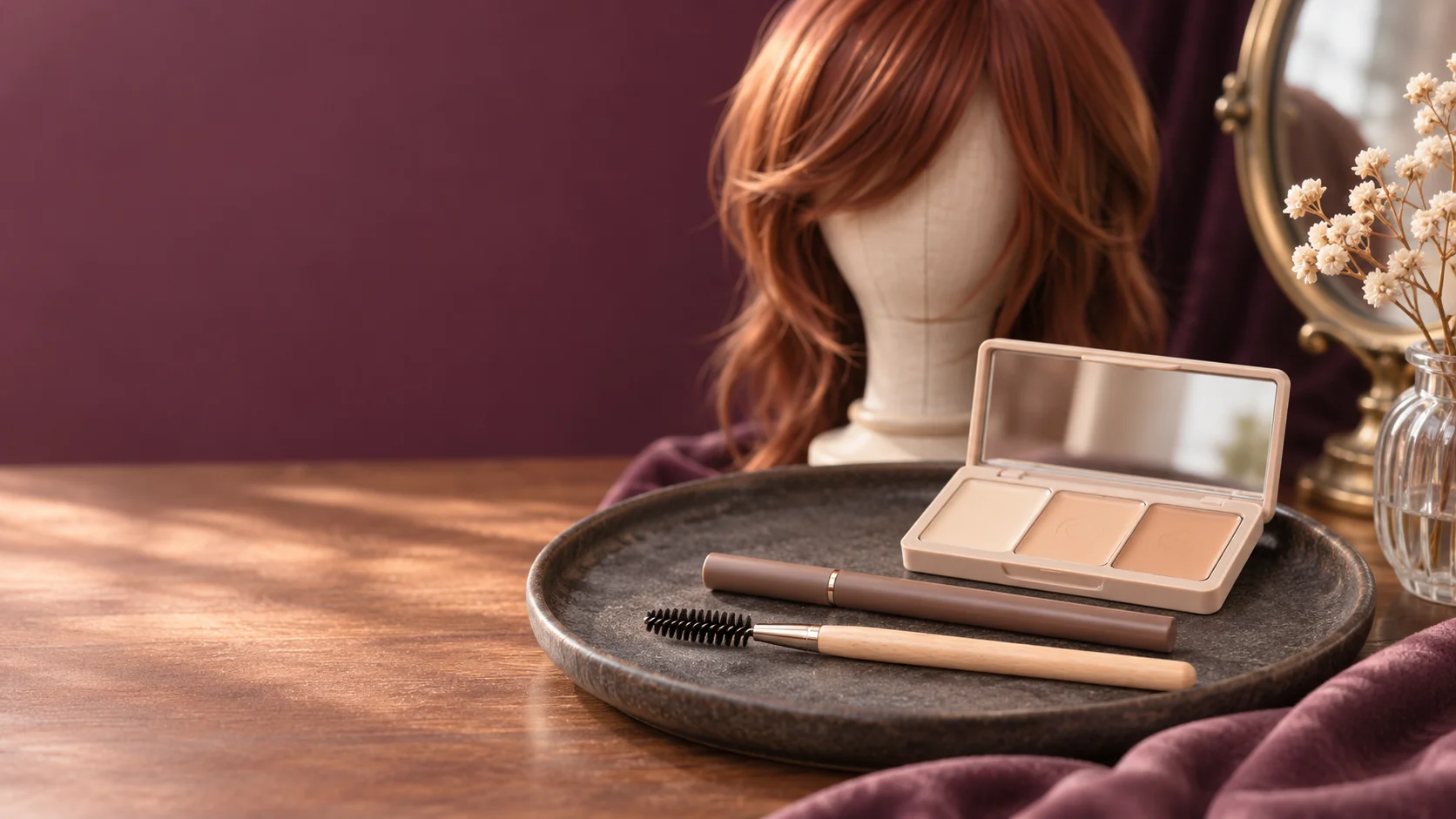
Brush the brow into its natural direction with a suitable clean tool. Apply a small amount of an appropriate cosmetic and check the result before adding more. Follow the product's instructions rather than layering until the skin becomes uncomfortable. Test the visual effect with the wig on, since the fringe may hide part of the brow.
Draw the character cue conservatively
Use short strokes to suggest the direction you want without extending toward the eye. Check the expression from a normal viewing distance. A completely opaque block may be unnecessary for the character and harder to maintain. The makeup planning guide helps you decide which feature deserves attention.
Remove gently and stop for irritation
Use the labeled removal method and avoid pulling brow hairs with dried product. Stop if the skin reacts and seek advice for symptoms that persist. More advanced theatrical blocking should use products and training appropriate to the task. A simpler brow with the right hair and clothing is a valid finished look.
Decide how much change is needed
A character's brow shape can often be suggested with color and a new drawn line without fully covering your natural brows. Compare the reference with your face and decide whether you need softer color, a shorter tail or a completely different arch. Try the least complex version first. A wig fringe or glasses may already hide part of the brow. Full coverage takes more products and removal time, so make it a deliberate choice. The goal is a recognizable expression that remains comfortable, not a perfectly invisible brow at close range.
Choose products for skin near the eyes
Read labels to confirm each cosmetic is intended for the area and follow its application and removal instructions. Do not substitute craft glue, a household adhesive or an unfamiliar paint. Check ingredients if you have a known sensitivity. Use clean tools and do not share eye-area makeup. The FDA notes that cosmetics around the eye require attention to contamination and approved uses. Test new products ahead of the event as directed. If skin is irritated or broken, postpone the technique and choose a lighter look that avoids that area.
Make a light test first
Brush the brow hairs into a controlled direction and try a small amount of suitable brow or complexion product. Let each layer settle according to its instructions before adding another. Check the result with both eyes open and the face relaxed. A thick layer can emphasize texture and be harder to remove. If the natural brow still shows, decide whether that matters at the distance where the costume will be seen. A photograph from a few steps away is more useful than inspecting only a magnifying mirror. Stop if a product causes stinging or discomfort.
Draw the new shape carefully
Use the character reference to identify the brow's angle, thickness and distance from the eye. Mark the new line lightly, then compare both sides before filling it in. Avoid drawing so close to the eye that the product's label would not permit that use. A subtle difference can change the expression without requiring dramatic coverage. Put on the wig and check whether the fringe alters the apparent shape. Adjust the drawn line before adding more covering layers. The whole face and costume should guide the final decision.
Rehearse with the full outfit
Wear the makeup with the wig, cap and any headpiece that will touch the forehead. Check whether the brow product transfers or breaks down after a few hours. Test the lighting where photographs are likely to be taken. A look that seems invisible under bright bathroom light may appear different at an event. Record the product order and time required so you can repeat it calmly. If the technique takes longer than your schedule allows, simplify it rather than rushing near the eyes on event day.
Remove without scraping
Use the remover recommended for the specific products and allow it to work as directed. Avoid picking at dried layers or rubbing hard through brow hair. Clean the surrounding skin gently and stop if it becomes irritated. Wash tools and close products after use. If an adhesive or cosmetic causes a rash or swelling, discontinue it and seek appropriate advice. A good brow-covering method includes an easy removal routine. The character look lasts only for the event; your natural hair and skin need to remain comfortable afterward.
Use a lighter alternative
Tinting or brushing the brows, shifting the wig fringe or choosing a character interpretation with a compatible brow can reduce the need for full concealment. A photograph can also use lighting and angle to emphasize the intended expression. If you edit an image, be clear when showing it as a makeup tutorial result. A partial change can still communicate the design. Keep a note of which feature viewers noticed first; it may not be the brow at all. That observation can save time and product on the next version.
Check official cosmetic advice
The FDA's eye-cosmetic safety guide covers hygiene, sharing and application risks. Its allergen information supports label checks and attention to reactions. General cosmetic guidance explains safe handling, while latex-in-cosmetics information matters if a skin adhesive is being considered. These sources do not choose a brow technique for you. Follow the exact product instructions and use a method that can be removed without harming the skin or hair.
A brow trial checklist
Have you chosen the smallest change that communicates the character? Are the products intended for the areas where they will be used? Are the tools clean and the ingredients acceptable for you? Can you apply and remove the look without discomfort? Have you checked it with the wig and in ordinary lighting? If a step fails, adjust the plan before event day. A clear drawn brow may do the job without complete coverage. A comfortable result that survives the outing is more useful than a close-up effect that causes irritation.
Keep the first attempt reversible
Make the first rehearsal when you have time to remove the products completely and care for the skin afterward. Photograph a light version before adding a stronger covering layer. If the lighter version already works with the wig, stop there. If you continue, follow each product's drying and removal directions. Avoid stacking incompatible products because a video used them on someone else's skin. The correct result is personal to your features and tolerance. A test that ends with comfortable skin and a repeatable routine is more useful than one dramatic photograph that cannot be worn.