Start with a documented example
The International Costumers' Guild records Myrtle R. Douglas's contribution to the first Worldcon. Douglas, also known as Morojo, made the futuristic costumes worn by herself and Forrest J Ackerman in 1939. This matters because the making of the outfits can disappear when the story is reduced to the person photographed wearing one.
Distinguish a precedent from a single origin
A documented convention costume is evidence of fan costuming at that event. It does not prove that no one dressed as a fictional figure elsewhere. Theater, fancy dress and fan gatherings provide different contexts for wearing a costume. A careful history distinguishes those activities rather than forcing every example into a single birthday for the modern hobby.
Separate the word from the activity
Cosplay is commonly used as a shortened form of costume play. The activity and the label do not need to have started at the same moment. Accounts of the word's early publication can differ, so this guide does not attach a precise coinage year without a directly verified primary record. The definition guide focuses on how the term is used today.
Notice the work behind the image
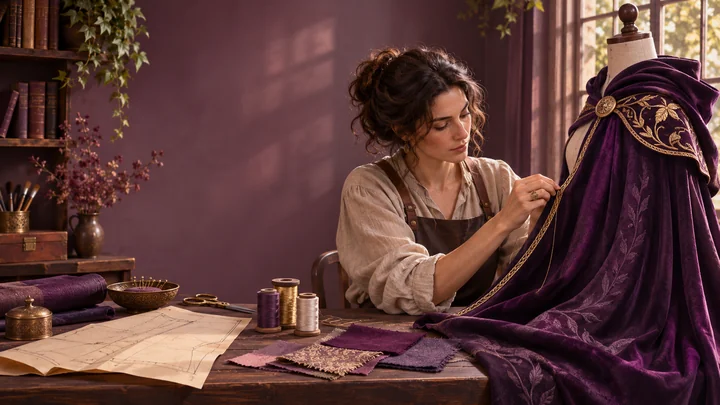
A costume photograph can document clothing, makeup, props and performance, but it rarely records every collaborator. Sewing, styling, photography and event organization may involve different people. When sharing a historical image, preserve its caption and credit rather than treating the visible wearer as the only creator.
Use history as an invitation
Learning about early fan costumes need not turn the hobby into a test of authenticity. Purchased pieces, handmade builds and original interpretations can serve different purposes. If the history makes you want to try a project, start with one manageable outfit and keep a record of who helped you make it.
Separate three different histories
A useful answer distinguishes dressing as a character, fan costuming at conventions and the later word cosplay. People used costumes long before modern fan events. A well-documented convention example comes from the first World Science Fiction Convention in New York in 1939, where Myrtle R. Douglas and Forrest J Ackerman appeared in futuristic costumes made by Douglas. That event is an important recorded point in convention costuming, not proof that nobody had ever dressed as a fictional figure before. Keeping the categories separate avoids giving one person credit for an entire human practice.
Give Myrtle Douglas her role
The International Costumers' Guild recognizes Myrtle R. Douglas, also known as Morojo, for making the costumes worn by her and Ackerman at the 1939 gathering. An account that only names the person in a photograph can erase the maker. Douglas's work matters because it turned an imaginative design into a wearable object in a fan setting where others could see it. The Guild's records and the Worldcon organizer's history describe the episode. It is reasonable to call it a significant early convention-costuming example; it is too simple to describe it as the invention of every form of cosplay.
Notice how conventions developed
A costumed attendee can inspire others to bring their own work. Over time, conventions developed masquerades, judging, workshops and informal hall costumes. These activities gave makers reasons to plan a character, solve construction problems and share techniques. The International Costumers' Guild preserves material from decades of fan costuming, which helps reveal change across events rather than a single founding moment. A stage masquerade and a casual costume in a hallway can have different rules and aims. Both are part of the broader story of fans using clothing to express an idea.
Explain the later word
The word cosplay combines costume and play through Japanese usage. Smithsonian's discussion attributes the term to Nobuyuki Takahashi in the early 1980s. That is a history of a label, not the beginning of all character costuming. The distinction matters when a source says that cosplay began in Japan while another points to earlier convention costumes in the United States. They may be describing different developments: a term and a set of practices. Avoid attaching a precise year to every use of the word without a contemporaneous source, because later accounts can disagree about dates and first appearances.
Include work beyond the costume
Cosplay involves more than a finished outfit in a photograph. Makers may design patterns, sew, sculpt, style wigs, paint, document a build or perform a character. Photographers, friends and event organizers also shape what the public sees. When reading a historical account, ask who made the costume, who wore it, who photographed it and where the record was preserved. A famous image can hide a large amount of collaborative work. Giving credit to makers and archivists produces a more useful history and better habits for sharing modern projects.
Look for primary evidence
An organizer's record, archive photograph, dated program or original magazine can establish more than a repeated internet timeline. Secondary essays can help interpret the evidence, but they should identify their sources. Compare accounts when they disagree about a date or a person's role. The Guild's archive and a Worldcon organizer's retrospective are useful for early convention costuming. Smithsonian provides context for how the later term is discussed. None is a complete record of every place where people dressed as characters. State the scope of the evidence rather than stretching it into a universal first.
Use the history to make something
The early convention story is useful because it shows that fans could make an imaginative outfit without a commercial costume market. That does not mean you must sew everything yourself today. Buying, adapting and making can all be part of a project, depending on your goal and event rules. Choose a design that interests you, document who helped and keep a note of the techniques you used. If you enter a judged masquerade, read its current construction criteria. If you attend casually, focus on a safe, wearable interpretation. The history opens possibilities rather than setting a purity test.
Read the original organizations
The International Costumers' Guild's account of Myrtle Douglas identifies her work at the 1939 convention. Glasgow Worldcon's costuming history places the example within the event tradition. The Guild's archive description explains its preservation role. A Smithsonian folklife essay discusses the Japanese term and modern community. These sources support different parts of the answer; none should be made to prove more than it documents. For an individual costume claim, look for the maker's own record whenever possible.
A short timeline with limits
Before 1939, people dressed for performance, parties and other forms of play; that broad background is not the same as a modern fan convention. In 1939, Douglas and Ackerman provided a documented convention-costuming example at Worldcon. In later decades, masquerades and fan craft grew across events. In the early 1980s, the Japanese term that became cosplay entered discussions of this activity. Today's practice crosses many media, methods and communities. This is a selective timeline, not a claim that every community followed the same path. The more precise answer to “who started cosplay?” is to name the tradition, the documented example and the later word separately.
What a historical claim should say
When a source calls someone the first cosplayer, ask what it actually documents. Is it the earliest surviving photograph, the first known convention example, the origin of a word or a later celebration of a pioneer? Those are different claims. Prefer dates and names linked to an archive or event record. Acknowledge uncertainty where the evidence is incomplete. The story of Douglas and Ackerman is important because it is documented and influenced convention culture, while the later Japanese term reflects another phase of development. A careful history can honor both without pretending one person created every costume practice that followed.